Why the underbody needs protection especially in winter and how to clean it
While paint, wheels, and the interior get regular attention, the underbody often goes ignored — even though it's one of the most heavily stressed areas of any vehicle. Professional underbody care is a key factor in retaining value, ensuring safety, and supporting long-term vehicle performance.
The underbody is permanently exposed to extreme conditions: water, dirt, road salt, grit, temperature swings, and mechanical impacts hit sensitive components head-on. The strain increases significantly in winter. Without consistent underbody care, corrosion, rust, and material damage can develop — and these get expensive in the long run.
Modern underbody care isn't just about cleaning — it's active protection. It creates a barrier against moisture and aggressive substances and plays a major role in extending the life of your vehicle. Anyone using underbody care strategically is thinking ahead — decisively, confidently, and with a clear standard of quality.
Why winter is the biggest challenge
In winter, the need for underbody care peaks. Road salt is one of the worst enemies of any vehicle. It dramatically accelerates corrosion, especially when moisture stays on metal parts. Salt lowers the freezing point of water — great for traffic safety, but brutal on the underbody.
Underbody care protects against:
- Corrosion on load-bearing components
- Rust on welded seams
- Damage to brake lines and axle components
- Salt and road-grime deposits
Without targeted underbody care, a slow process sets in. At first, only small spots of rust show up; later, structural components can be affected. And salt isn't the only problem. Slush, ice, moisture, and grit build up especially heavily in winter. This mix acts like a constant attack on unprotected surfaces. Underbody care provides a protective seal here and significantly reduces the risk of long-term damage.
Cleaning the underbody: the first step to lasting protection
Effective underbody care starts with a thorough cleaning. Only a clean underbody can be protected long-term. Residue from salt, oil, dirt, and road grime has to be removed completely before any protective products go on.
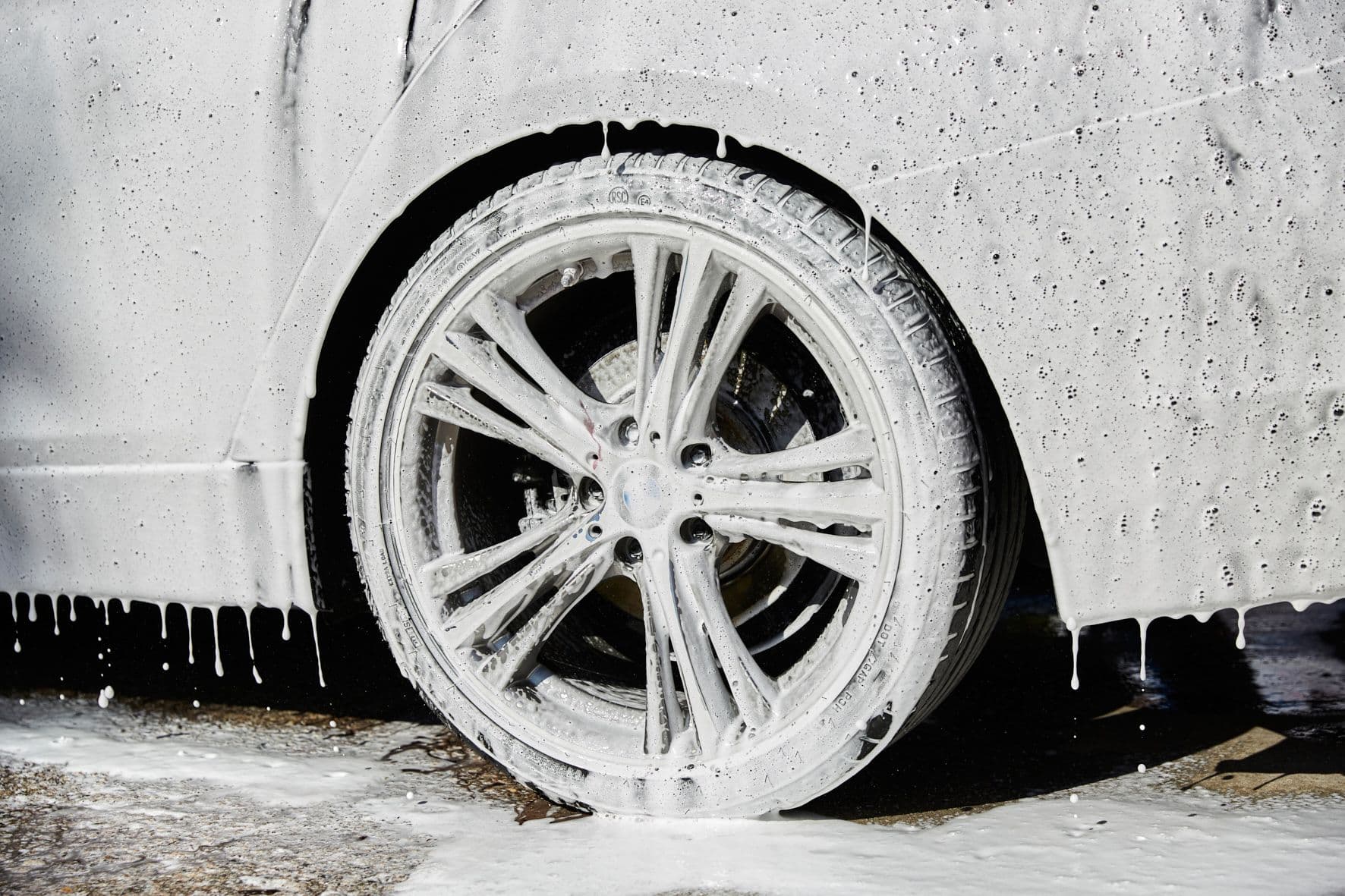
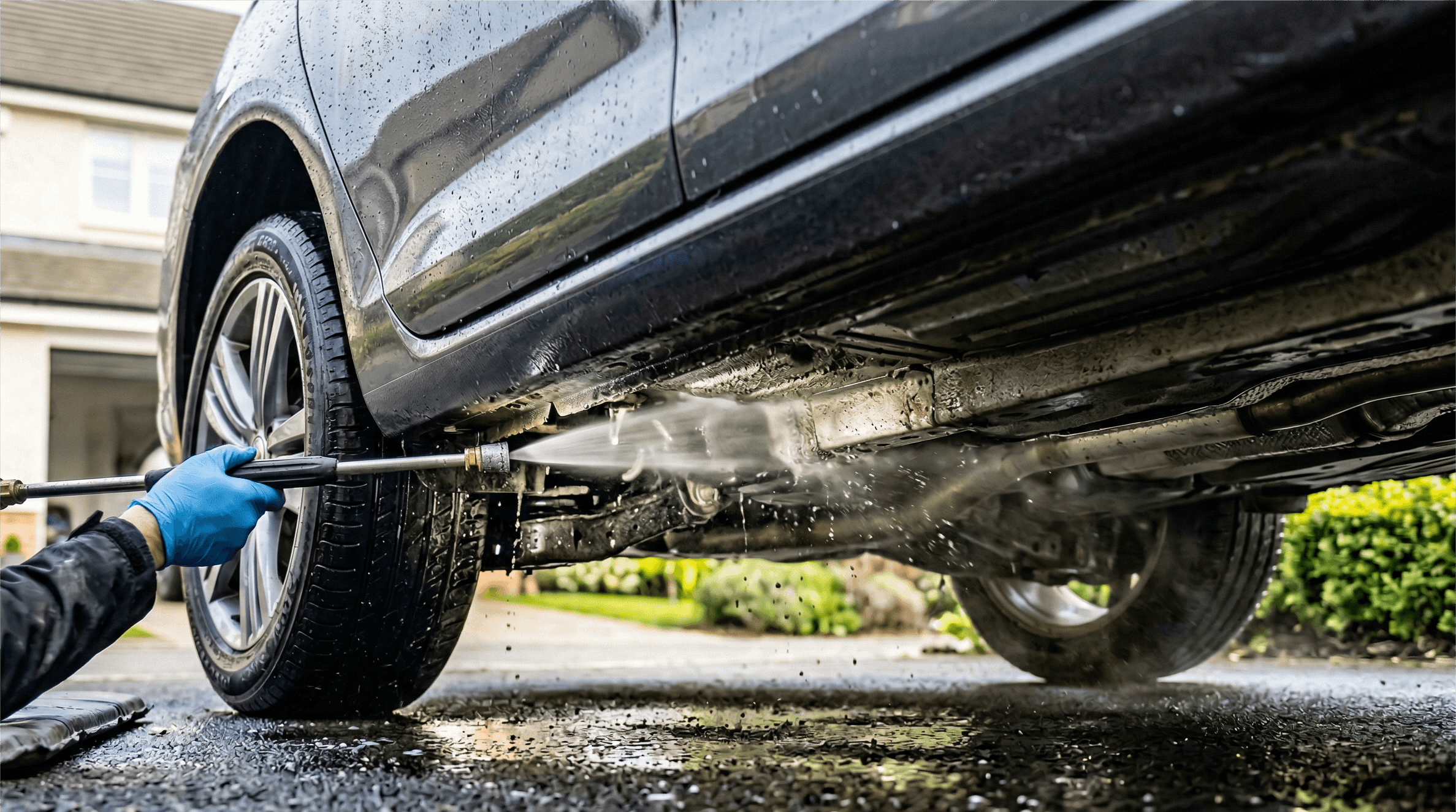
Cleaning as part of underbody care is best done with a pressure washer or special underbody cleaning attachments. Don't forget the hard-to-reach areas like wheel wells, cross members, and axle mounts. Make sure to choose an appropriate pressure setting so you don't damage sensitive components.
Steps for effective underbody care:
- Lift the vehicle or make the underbody accessible
- Remove coarse dirt mechanically
- Clean thoroughly with water and a suitable cleaner
- Let it dry completely
Drying is a critical step in underbody care. Residual moisture can get trapped under a protective layer and actually accelerate corrosion. So the underbody needs to be completely dry before moving on to the next step.
Regular underbody care, especially after the winter season, reduces buildup and preserves the material structure long-term.
Applying a protective layer: underbody care with long-term effect
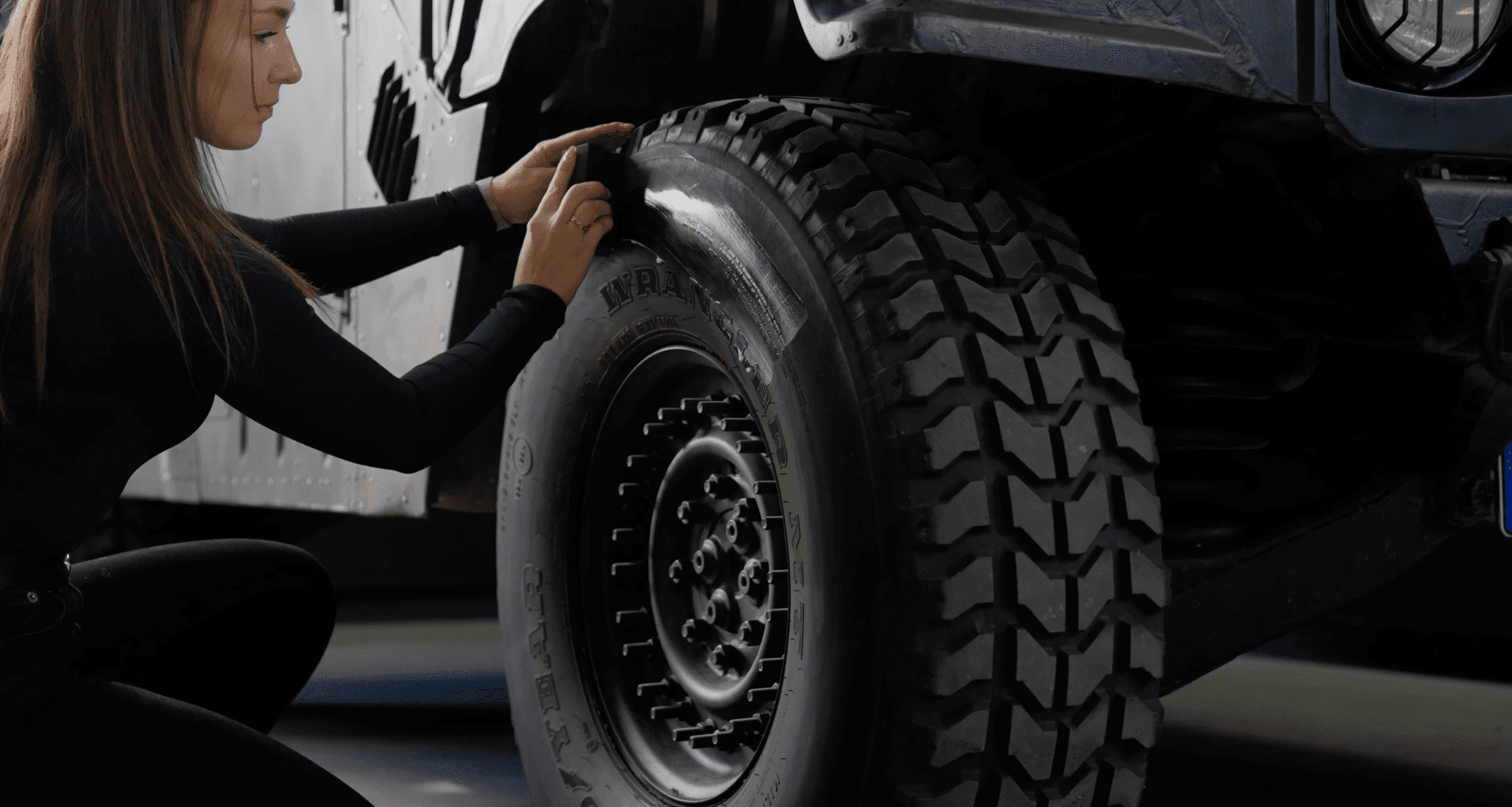
After cleaning comes the most important part of underbody care: applying a protective coating. Modern underbody care products are based on waxes, bitumen, or innovative polymer formulations. They form a tough protective layer that repels moisture and salt.
Underbody care matters because it adheres strongly to metal surfaces, forms an elastic protective layer that reliably guards against stone chips, and repels water and salt. At the same time, it delivers long-term durability and preserves the substance of the underbody.
The protective layer in underbody care should be applied evenly. Particularly vulnerable areas like welded seams, folds, and transitions deserve extra attention. This is where corrosion typically starts.
Underbody care keeps the protective film flexible. That's crucial, because the underbody is constantly exposed to vibration and temperature swings. A rigid coating can crack — an elastic underbody care product, on the other hand, stays stable and performs reliably.
When and how often should you do underbody care?
Underbody care isn't a one-and-done task. For best results, check the underbody regularly — at least once a year, ideally before and after the winter season.
Underbody care is especially worthwhile for:
- New vehicles, as prevention
- Used cars showing early signs of rust
- Vehicles in regions with heavy winter use
- High-mileage drivers
Stick with underbody care consistently and you'll cut repair costs long-term and significantly boost resale value. With leased vehicles, professional underbody care can help avoid depreciation charges.
For classic cars and enthusiast vehicles, underbody care is essential too. Here it's not just about protection but about preserving the substance of the car. Underbody care becomes an active contribution to the vehicle's history.
Underbody care as a strategic part of modern car care
Underbody care is a key factor in retaining value and ensuring safety. It shows responsibility and a clear commitment to protecting your vehicle long-term. While paint, wheels, and the interior catch the eye right away, real durability often depends on the parts you never see. Stay on top of underbody care and you'll protect critical load-bearing components, increase safety, and preserve your vehicle's substance.
In the cold season especially, underbody care is essential for fighting back against the aggressive effects of salt and moisture. Only the combination of thorough cleaning and a tough protective layer creates a reliable foundation for lasting value and long-term vehicle care.